
Francis Halzen Awarded Nobel Prize in Physics for Neutrino Research
Francis Halzen, affiliated with the University of Wisconsin–Madison, has won the Nobel Prize in Physics for his work on capturing high-energy neutrinos from space, research initiated at the South Pole.
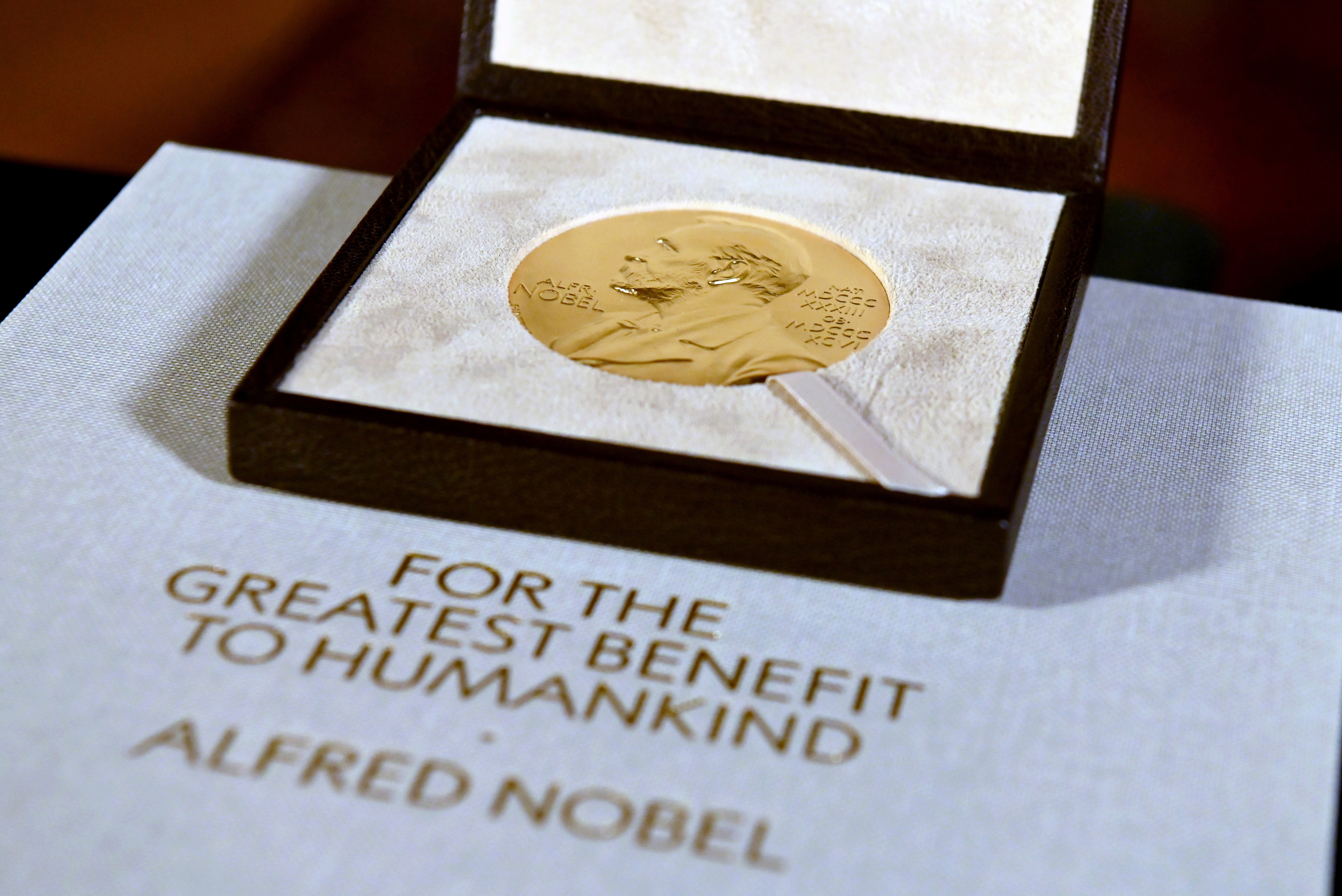
 Baltimore, MD, October 6, 2026 — Professor Francis Halzen, a physicist associated with the University of Wisconsin–Madison, has been named a recipient of the Nobel Prize in Physics. The prestigious award recognizes his groundbreaking work in capturing high-energy neutrinos originating from outer space.
The research that led to this significant achievement was initially established at the South Pole, a location chosen for its unique observational advantages. Halzen’s work has been pivotal in advancing the field of neutrino astronomy, a discipline that studies the universe by detecting these elusive subatomic particles.
Neutrinos are often referred to as “ghost particles” because they interact very weakly with matter, making them incredibly difficult to detect. However, their ability to travel unimpeded through vast cosmic distances and dense matter allows them to carry direct information from the most energetic and distant phenomena in the universe, such as supernovas, active galactic nuclei, and gamma-ray bursts. Capturing and analyzing these high-energy neutrinos provides scientists with a unique window into the most extreme cosmic events.
The development of detectors capable of observing these particles at the South Pole has been a monumental scientific undertaking. These detectors are designed to register the rare instances when a neutrino does interact with matter, producing secondary particles that can be observed. Professor Halzen’s contributions have been central to the design, construction, and interpretation of data from these sophisticated instruments.
The Nobel Prize in Physics is awarded by the Royal Swedish Academy of Sciences and is considered one of the highest honors in the scientific community. The announcement marks a significant moment for the University of Wisconsin–Madison and for the global community of astrophysicists and particle physicists.
Further details regarding the Nobel Prize ceremony and the specific citation will be announced by the Nobel Foundation.
Story summarized from the original created by The Associated Press on www.npr.org, see more information here.
Media gallery
