Precision Radiation Therapy Alone Doubles Historical Survival Rates for Inoperable Lung Cancer, Landmark Lancet Trial Finds
NEW YORK, Sept. 24, 2026
Press Release Disclaimer: This is a press release distributed through the XPR Media network. It has not been independently verified by our newsroom.

Precision Radiation Therapy Alone Doubles Historical Survival Rates for Inoperable Lung Cancer, Landmark Lancet Trial Finds
PR Newswire
NEW YORK, Sept. 24, 2026
New York Proton Center Chief Medical Officer Dr. Charles B. Simone II Serves as Co-First Author of Groundbreaking Phase III Trial Establishing 82% Two-Year Survival Benchmark
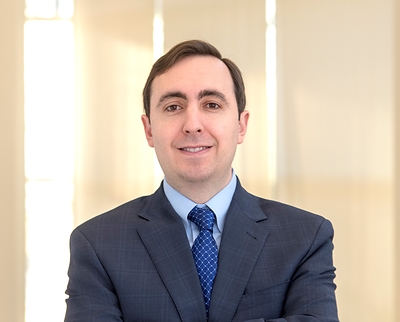
NEW YORK, Sept. 24, 2026 /PRNewswire/ — The New York Proton Center (NYPC), a global leader in proton therapy research and education and the first and only proton therapy center in New York, announced today that its Chief Medical Officer, Charles B. Simone II, MD, serves as co-first author of the National Cancer Institute-funded SWOG/NRG Oncology S1914 clinical trial published September 6, 2026, in The Lancet.1 The study is the first fully reported Phase 3 cooperative group randomized trial to evaluate immunotherapy in combination with stereotactic body radiation therapy (SBRT) for early-stage, inoperable non-small-cell lung cancer (NSCLC) — and it establishes a new standard for what modern precision radiation therapy can achieve for patients who cannot undergo surgery.
“This trial tells a story that every patient, physician, and policymaker needs to hear: modern precision radiation therapy has transformed what is possible for patients with early-stage lung cancer who cannot have surgery. An 82% two-year overall survival, achieved consistently across 146 institutions nationwide, is evidence that precise SBRT works at scale and for the patients who need it most,” said Charles B. Simone II, MD, Chief Medical Officer, New York Proton Center, and Co-First Author, SWOG/NRG S1914. “The fact that immunotherapy added no benefit in this setting is an important finding that will help inform a new generation of clinical trials, but the outcomes achieved with SBRT alone in this trial demand our full attention as clinicians.”
A Landmark Finding for Patients
The SWOG/NRG Oncology S1914 trial enrolled 417 patients across 146 institutions throughout the United States between March 2020 and September 2024 — making it the largest prospective SBRT study ever reported. SBRT monotherapy alone achieved an 82% two-year overall survival rate (95% CI 75–87%). The study concludes that these results are “better than expected” and represent a “new benchmark for expected outcomes with SBRT.”1
These findings take on particular significance against a backdrop of steadily improving — but historically modest — outcomes for this patient population:
- Before SBRT became standard of care, conventional radiation for inoperable early-stage NSCLC produced two-year survival rates below 40%.2
- RTOG 0236 — the transformative Phase II trial that established SBRT as standard of care — reported three-year overall survival of just 55.8%, with a median overall survival of four years.3
- S1914’s 82% two-year overall survival was achieved consistently across 146 institutions — community and academic centers alike — with rigorous, centralized radiation plan review for every patient, demonstrating that this level of precision can be delivered reliably and at scale.1
The trial also found that adding atezolizumab immunotherapy to SBRT conferred no additional benefit and significantly increased toxicity. Grade 3 or higher adverse events occurred in 12% of patients on the combination arm versus 3% on SBRT alone; two grade 5 respiratory events occurred with immunotherapy, none with SBRT alone. The study concludes: “SBRT monotherapy remains the standard of care.”1
Advancing the Science of Lung Cancer Care
For patients with early-stage NSCLC who are medically inoperable, SBRT has long represented the primary curative-intent treatment option. S1914 provides the most rigorous, large-scale prospective evidence to date of what modern SBRT can achieve in this population — and the results exceed what has previously been achieved. The trial’s centralized radiation quality assurance protocol, which required review of treatment plans for all 146 participating sites, also establishes a new model for multi-institutional research quality in radiation oncology.
Dr. Simone has been a principal investigator or co-chair of 12 NIH-funded cooperative group clinical trials spanning NRG Oncology, SWOG, ECOG-ACRIN, Alliance, and the Proton Collaborative Group. His co-first authorship of S1914 reflects NYPC’s commitment to advancing the science of radiation oncology through the most rigorous channels available — from National Cancer Institute–sponsored cooperative group trials to publishing in The Lancet, the world’s highest-impact peer-reviewed medical journal.
“The publication of this trial in The Lancet is a testament to the quality of the science and the dedication of Dr. Simone and his co-investigators to answering the most important questions in lung cancer care,” said Christopher Panczner, Chief Executive Officer, New York Proton Center. “At NYPC, we believe that advancing cancer care means contributing to the evidence base that guides treatment decisions for patients everywhere, not just those who walk through our doors. This research does exactly that, and we are proud that NYPC’s clinical leadership continues to help define the future of radiation oncology.”
About the New York Proton Center
The New York Proton Center (NYPC) is creating the gold standard for proton therapy, giving new hope to patients living with cancer. The NYPC is advancing new and better ways to fight cancer with proton therapy, a highly targeted form of radiation therapy with fewer treatment-related complications. In partnership with leading academic medical centers: Memorial Sloan Kettering Cancer Center, Montefiore Health System, and Mount Sinai Health System, NYPC is the only proton center in the state of New York, attracting patients from around the country and the world. Through impactful clinical trials and game-changing clinical research, NYPC’s internationally renowned clinical team continues to revolutionize cancer treatment while offering patients individualized, highly skilled, and compassionate care.
Learn more at nyproton.com.
References
- Daly ME, Simone CB 2nd, Redman MW, et al. Induction and consolidation atezolizumab with stereotactic body radiation therapy versus radiation alone in high-risk, early-stage non-small-cell lung cancer (SWOG/NRG S1914): a multicentre, open-label, superiority, phase 3, randomised controlled trial. The Lancet Published online September 6, 2026. doi:10.1016/S0140-6736(26)01655-7
- Videtic GMM, Donington J, Giuliani M, et al. Stereotactic body radiation therapy for early-stage non-small cell lung cancer: Executive Summary of an ASTRO Evidence-Based Guideline. Practical Radiation Oncology2017;7:295–301. doi:10.1016/j.prro.2017.04.014
- Timmerman R, Paulus R, Galvin J, et al. Stereotactic body radiation therapy for inoperable early-stage lung cancer. JAMA 2010;303(11):1070–1076. doi:10.1001/jama.2010.261
Media Contacts:
Melissa Weisstuch
Marketing & Communications Manager, New York Proton Center
P: 646-968-9061 | C: 914-645-6444
mweisstuch@nyproton.com
Amy Briskin
TogoRun Media Specialist
C: 917-734-1639
a.briskin@togorun.com
 View original content to download multimedia:https://www.prnewswire.com/news-releases/precision-radiation-therapy-alone-doubles-historical-survival-rates-for-inoperable-lung-cancer-landmark-lancet-trial-finds-302888559.html
SOURCE New York Proton Center